Lightweight Vango tent
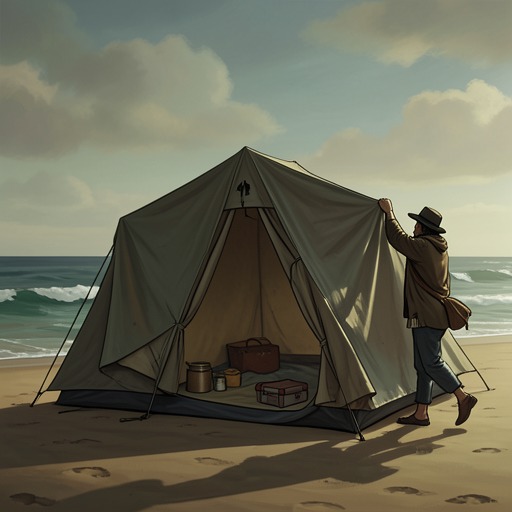
The Salt PathThe Lightweight Vango tent was the small, second-hand shelter Ray and Moth chose when homelessness, Moth’s illness, and the loss of their income made a conventional home seem out of reach. Bought for £38 after an anxious online auction, it was light enough to carry and became the green dome around which they organized daily life on the South West Coast Path. Its significance lies not in comfort or security alone: the tent was a fragile piece of equipment, a substitute home, and a material reminder that belonging might be made without owning a house.
Why the tent was needed
After their home and holiday-rental business were lost, Ray and Moth considered where they could live while deciding what came next. A campsite would have cost £80 a week, beyond their means, and housing benefit did not cover campsite fees. There were no spare rooms or gardens available to them for more than a few weeks, and caravans in the holiday area were booked for visitors. Renting looked scarcely more possible: repossession had damaged their credit rating, while the council could offer only a low-priority place on its list and, at that moment, a bed-and-breakfast room in accommodation mainly used by people with drug and alcohol problems. The encounter left them certain that they would rather be in a tent. The shelter was therefore not an accessory for a leisure trip; it was part of the answer to the question of where they could go.
The decision to walk required equipment they could not easily afford. Moth’s old rucksack had large metal buckles that had rusted shut, and Ray’s pack lining had disintegrated, allowing water through. Two replacement packs from Mountain Warehouse cost less than half the price of one high-end pack, but their small capacity forced the couple to rethink what they could take. Moth could not carry a larger pack, and the tent they already had was too heavy for his shoulder and too large for the new bags. A durable, high-quality replacement was out of reach. The Lightweight Vango tent emerged from that practical bind: it had to be shelter, but it also had to be light and compact enough to travel with them.
The bargain that became a home
Ray suggested looking on eBay. Waiting for the auction to close was nerve-racking because the item at stake was to be their home for the rest of the summer, and perhaps longer. The winning tent had been used only once. At three kilograms, it weighed a quarter as much as their old canvas Vango tent and occupied only a fraction of its space. The price was £38. Ray and Moth celebrated by dancing around the kitchen table: the bargain was a rare scrap of good news after weeks of gloom, but it also gave their planned journey a necessary piece of infrastructure.
When the tent arrived three days later, they erected it in the living room. Its wide, low green dome spread across the floor, recalling a cap of moss on granite. They laid out self-inflating mats and sleeping bags bought for five pounds apiece at Tesco, and made tea on a tiny Campingaz stove. The domestic rehearsal ended with a sharp reminder of Moth’s physical limitations: when the couple tried to get out, he could not stand. Ray dragged him out in his sleeping bag and hauled him to his feet. The tent was light enough to carry, but it could not make the body’s difficulties disappear. Instead, this trial exposed the demanding reality behind the plan before they had even set off.
Packing it required another reckoning with scarcity. They knew that anything forgotten or left behind would have to be done without for the whole summer; they had no spare cash to replace equipment on the way, and food on the coast during peak holiday season would itself be a strain. Ray pared her clothing down to a bare minimum and packed the rest of their essential kit tightly into the small rucksacks. The tent’s compactness made the walk more possible, but it also belonged to a larger discipline of deciding what could be carried and what had to be left behind.
A fragile shelter on the path
The tent did not turn wild camping into effortless comfort. On their first attempt to pitch it on heather, they had little choice but to use a patch of young, short-stemmed growth. The thin groundsheet risked being torn, and unfamiliar poles and ropes took half an hour to wrestle into place. Once erected, the uneven base felt to them like lying in a fork drawer rather than on a feather mattress. When they wondered whether they had packed duct tape, the answer was no. The scene makes the tent’s lightness double-edged: the same portability that suited their packs left its thin floor exposed to rough ground, and there was no reserve equipment to repair a mistake.
As the days accumulated, however, the shelter acquired the repeated gestures of a home. Each evening Ray checked that everything was in place, finding reassurance in familiarity. The couple laid out their self-inflating mattresses, covered them with a small fleece blanket, arranged the sleeping bags, and put the rucksacks by their feet near the entrance. Cooking equipment went into the porch; clothes covered the remaining groundsheet to block the cold. Ray clipped a torch above the entrance zip, and Moth read from the only book they carried. The sequence transformed the same limited floor into a sleeping space, storage area, kitchen edge, and familiar nighttime interior. Against the exposed coast, routine helped establish a pocket of safety.
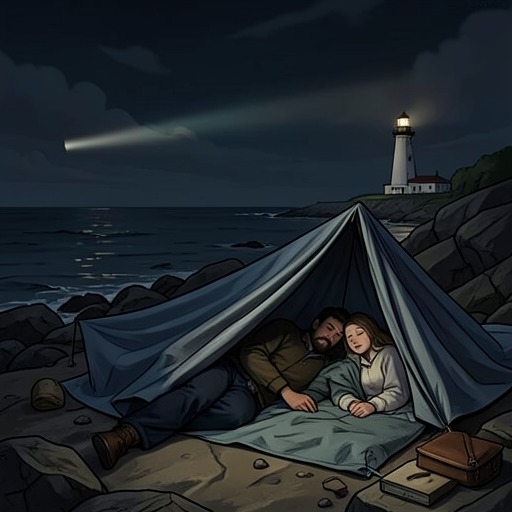
That security remained provisional. During one night, Moth was shivering and unwell as he went through withdrawal from a central nervous system depressant. Ray stayed close to warm him and repeatedly switched on the torch, while the tent held the couple and their possessions against the dark. In the morning, she fell out through the door and broke a leg of the stove support. The shelter contained their life, but it was not a sealed refuge from illness, cold, or mishap; its narrow threshold and fragile equipment made the limits of that refuge visible.
From portable shelter to belonging
The path around the tent was physically punishing. On a steep, zigzagging climb above Minehead, Ray and Moth stopped to catch their breath and check the guidebook, whose mild description of the route did little to prepare them for the ascent. Later, on exposed cliff paths, heat, pain, and vertigo shaped their progress. Such episodes underline the contrast between the narrow, repeatable domestic arrangement inside the tent and the changing ground on which they had to find places to pitch it. Shelter was never a fixed address; it had to be carried, erected, and adapted from one night to the next.
The tent’s role also changed as the walk became a way of enduring grief and uncertainty. Ray describes the repeated movement of walking as a meditation in which salt wind, dust, and light gradually displaced the pressure to make an immediate plan. Each climb out of a combe could register as a victory, and each day survived gave a reason to continue. The tent supported that repeated return to the path, while its nightly routine gave shape to lives otherwise unsettled by the loss of a house and the fear of Moth’s decline. It offered continuity without restoring what had been taken.
At the southernmost point of their walk, Ray recognized that the old home would not return and that her sense of direction had changed. The path, sometimes no more than a foot-wide strip of dirt, had become home; she came to feel that she did not need to own land in order to belong to the elements around her. After an inland period in which the couple felt uprooted, returning to the coast brought back the familiar pull of the horizon. They camped on Ballard Down, looking across the bay towards Swanage, and considered a future built around paid work, retraining, and a place of their own. The Lightweight Vango tent did not resolve their housing insecurity or Moth’s illness. Its more limited achievement was to make a temporary, carried home possible—and, through use, to help distinguish home as a practice of shelter and belonging from a property they had lost.